CNC and Conventional Milling
Manufacture metal on-demand
- Containerized, ruggedized, and easy to deploy
- Faster, lower cost, more scalable production
- Reduced reliance on supply chains
Expeditionary metal manufacturing
- Help pioneer new applications
- Support customers across industries and continents
- Partner with universities to strengthen the AM workforce
Our Sustainability Approach
- Emit 60% less CO2 compared to casting
- Consume 33% less energy compared to casting
- Eliminate the 17% of carbon emissions linked to shipping
Ensuring compliance
- Maintain a comprehensive digital thread for each part
- Collaborate with equipment suppliers
- Conduct thorough risk assessments
What’s the best compliance model?
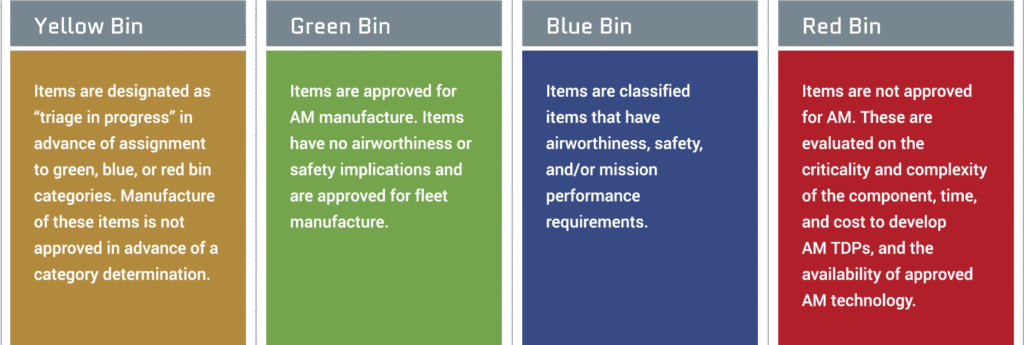
How do Intellectual Property (IP) rights come into play?
In many countries, IP rights granted to spare parts are limited as patent protection typically applies to machines rather than to spare parts.
The doctrines of ‘exhaustion’ and ‘implied license’ allow the purchaser of a patented product to use, re-sell, and repair that product without the patent holder’s permission. However, it’s crucial to ensure that additive-manufactured parts are not subject to any patents or other IP protections. Consulting a legal professional and conducting thorough research can help you avoid any legal issues.
It’s also important to note that design protection and the ‘right to repair’ may vary from country to country, with some providing greater leniency for repairing and maintaining complex products.
In the U.S., ‘right to repair’ bills are under consideration but have yet to become law. Meanwhile, though copyright law typically doesn’t protect mass-produced machine parts or functional items, infringement may occur if OEM drawings are used to create the spare part.
What about supplier contracts?
Contact Us
Machinery Studies
See our applications in action.
Careers Center
Get everything you need to cover the APR story.